DUST DEVIL
Released: January 2026
Platforms: PC (Windows)
Team Size: 6 developers
Role: Game Designer
Project Length: 6 months
Engine: Unreal Engine 5
Download and play the game on itch.io.
ABOUT THE GAME
Dust Devil is a singleplayer action rogue-lite that combines fast-paced vehicle combat with top-down shooter mechanics. The game takes place in a post-apocalyptic desert wasteland - a maddening place filled with vicious sandstorms, deranged mutated wildlife and deadly radiation levels.
To survive in the desert, you must keep your vehicle powered with biofuel, a crude resource harvested from the remains of slain bugs. Infusing your vehicle with enough biofuel unlocks powerful abilities that enhance driving and combat, allowing you to venture into more dangerous areas and tackle deadlier enemies.
In between expeditions, you can customise your rig with different weapons and modifications, including new tires, engines, fuel tanks, bumpers and mounted guns. Each vehicle modification provides a unique gameplay ability or effect, allowing you to combine them in different ways to unlock your vehicle's full potential.
Summary of Contributions
• UI design & programming (HUD, UI menus, vehicle customisation)
• Level & environment design (open world)
• Economy design (resources & balancing)
• Systems design (upgrades & abilities)
• Gameplay objectives & player progression system
DEVELOPMENT TEAM
Michael Halicas | Gameplay & Technical Designer
Stefan Bratkovic | Environment & Props Artist
Amy Agus | Creature Artist & Animator
Arthur Eisenhauer | Environment, Concept and VFX Artist
Jarrod Aubin | Gameplay, AI, and Backend Programming
Tate Jenetsky | Creative Lead, Level and UI Designer
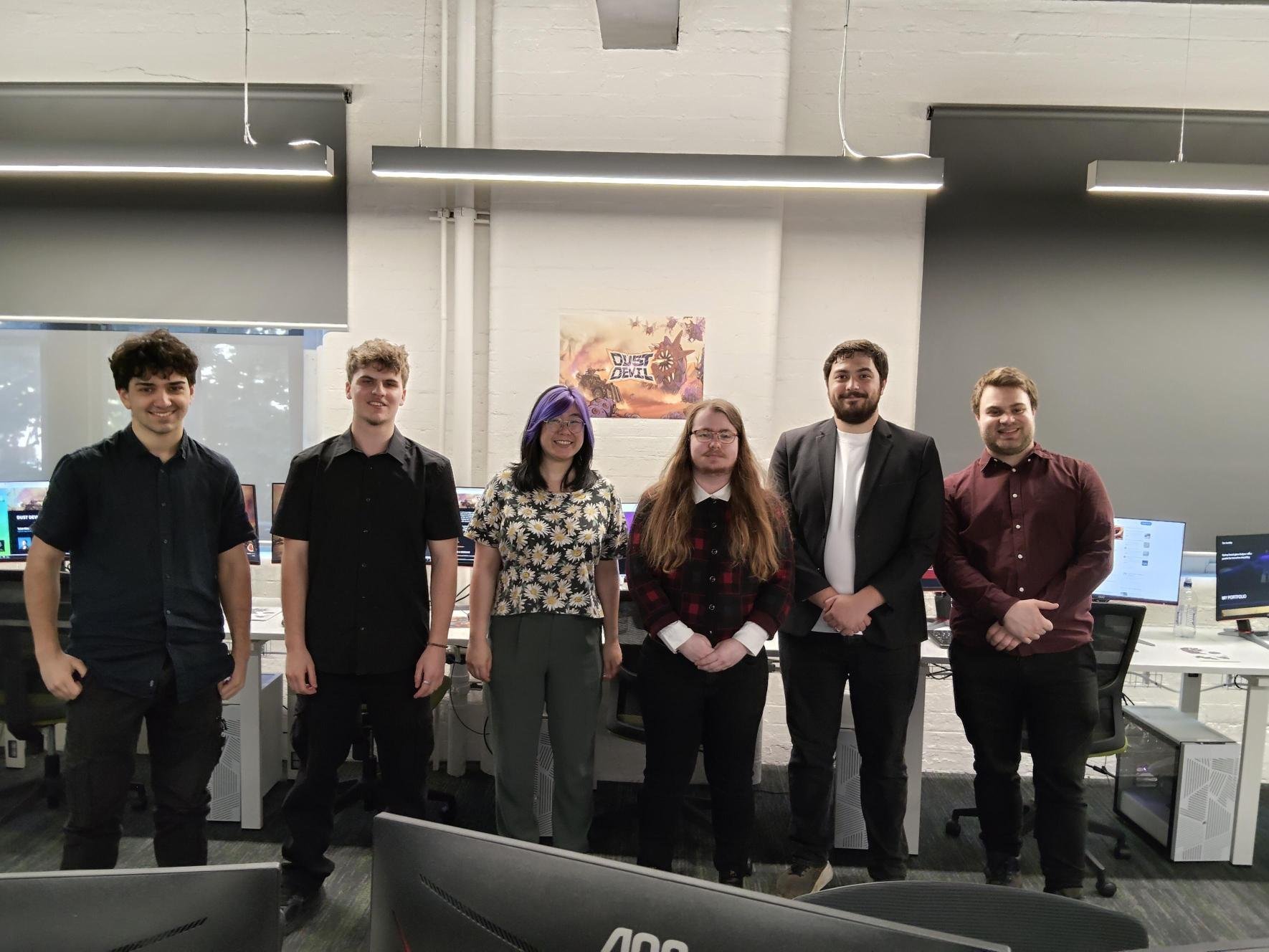
IMAGE GALLERY
DEVELOPMENT BACKGROUND
This game was my second year major work at AIE. It was developed over the course of five months as part of a team consisting of myself, one other designer, three artists and one programmer. At the start of production, every member of the team pitched ideas, which we eventually narrowed down to three. Following feedback from our trainers, we ultimately decided on the concept for Dust Devil, which was one of the ideas that I pitched.
The concept behind Dust Devil was heavily inspired by Mad Max, invoking that same dieselpunk aesthetic with its rusty scrapyard vehicles and endless expanses of desert, blended together with high octane action and visceral combat. Yet rather than face off against other vehicles, the player would battle swarms of mutated bugs. The look and feel of the bug enemies had various inspirations, including the arachnids from Starship Troopers, the sandworms from Dune, and the Terminids from Helldivers.
Gameplay wise, I originally conceived Dust Devil as a hybrid twin-stick shooter that alternated between being inside a vehicle and being on foot, however we felt that this was over scoped given the time we had, effectively needing to build two gameplay systems instead of one. With this feedback we reworked the concept so it would focus purely on vehicle gameplay, with the core loop revolving around using biofuel harvested from hostile wildlife to power the vehicle - essentially converting enemies into resources.
From here we settled on the idea of creating an action rogue-lite, as we wanted to incorporate systems for both temporary and permanent player progression. The game world would be designed as a hostile, dangerous environment that the player could not survive in for long, but would be filled with precious resources that could be used to permanently upgrade their vehicle. This allowed the player to gradually grow stronger and more resilient over time - able to survive longer during each expedition into the desert.
Initial game pitch
Mood board
Design Documentation
PAX AUS SHOWCASE
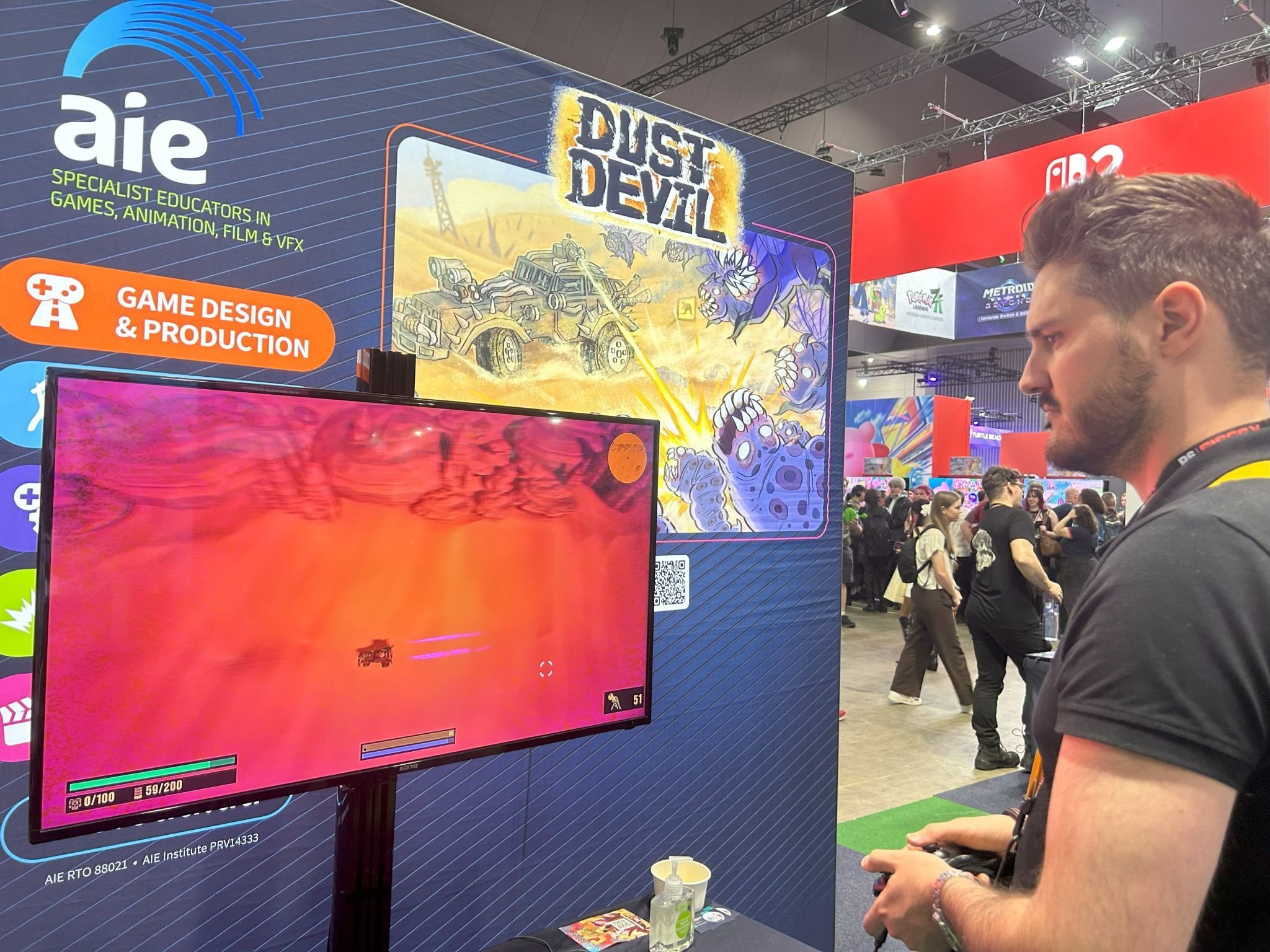
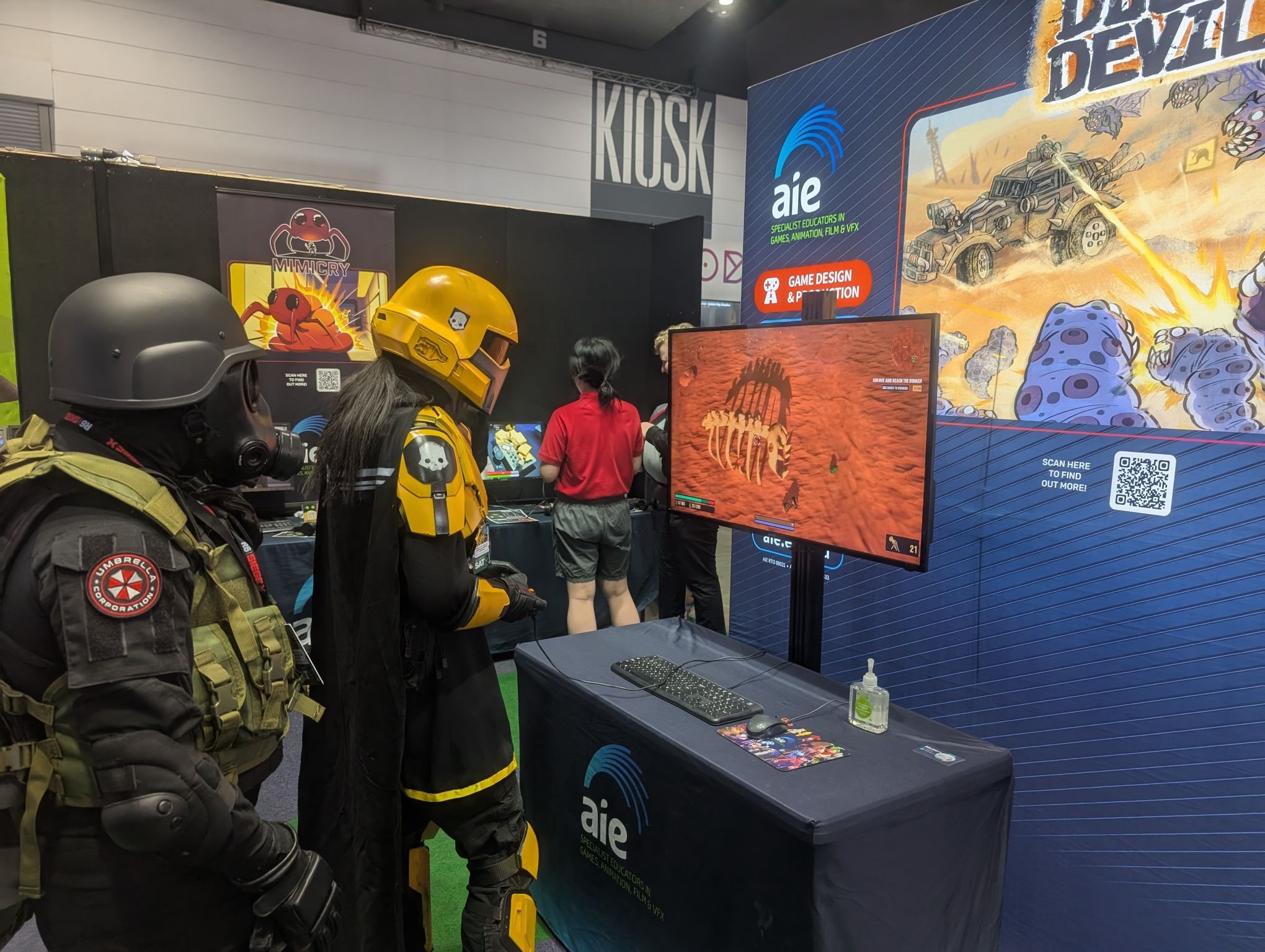
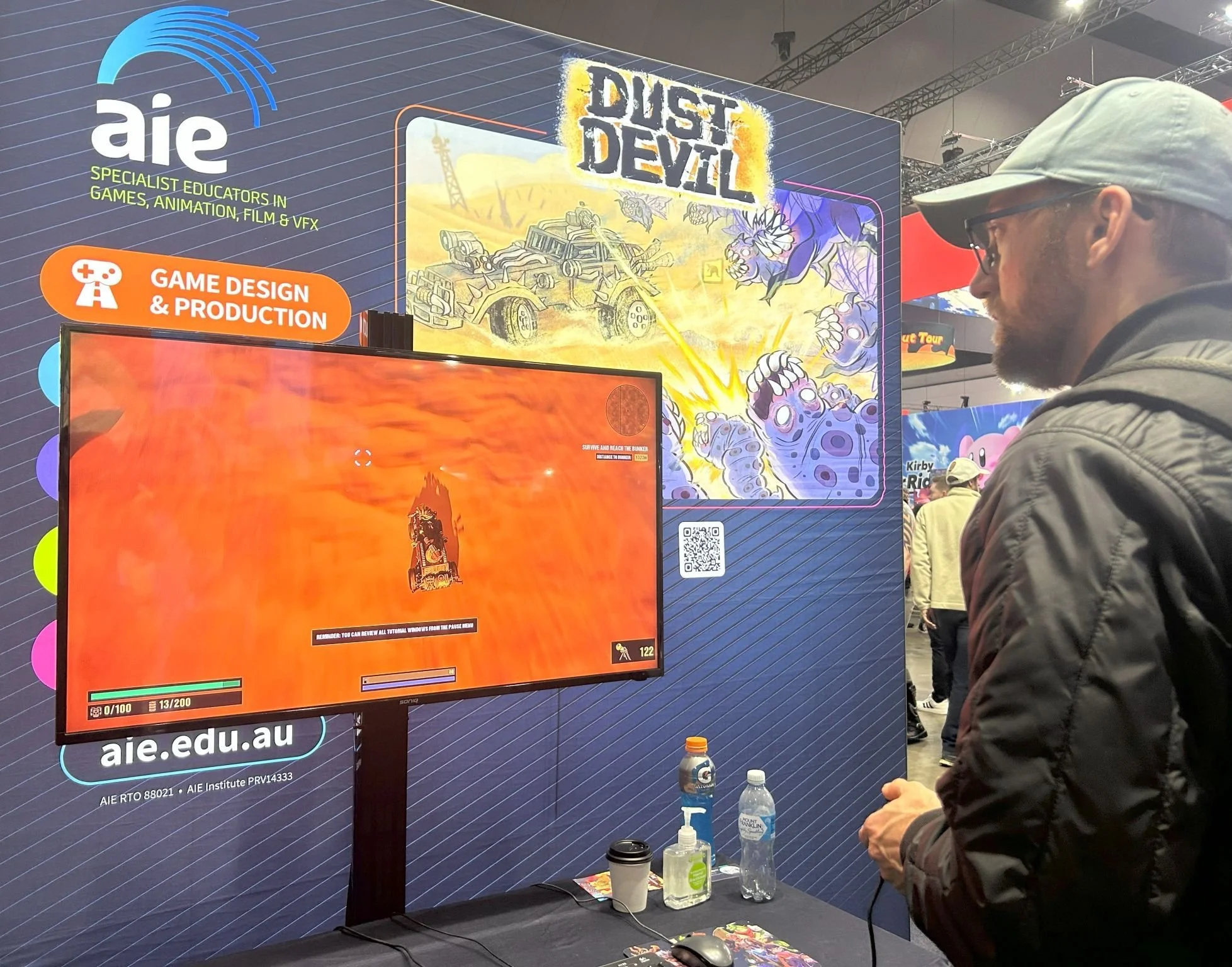
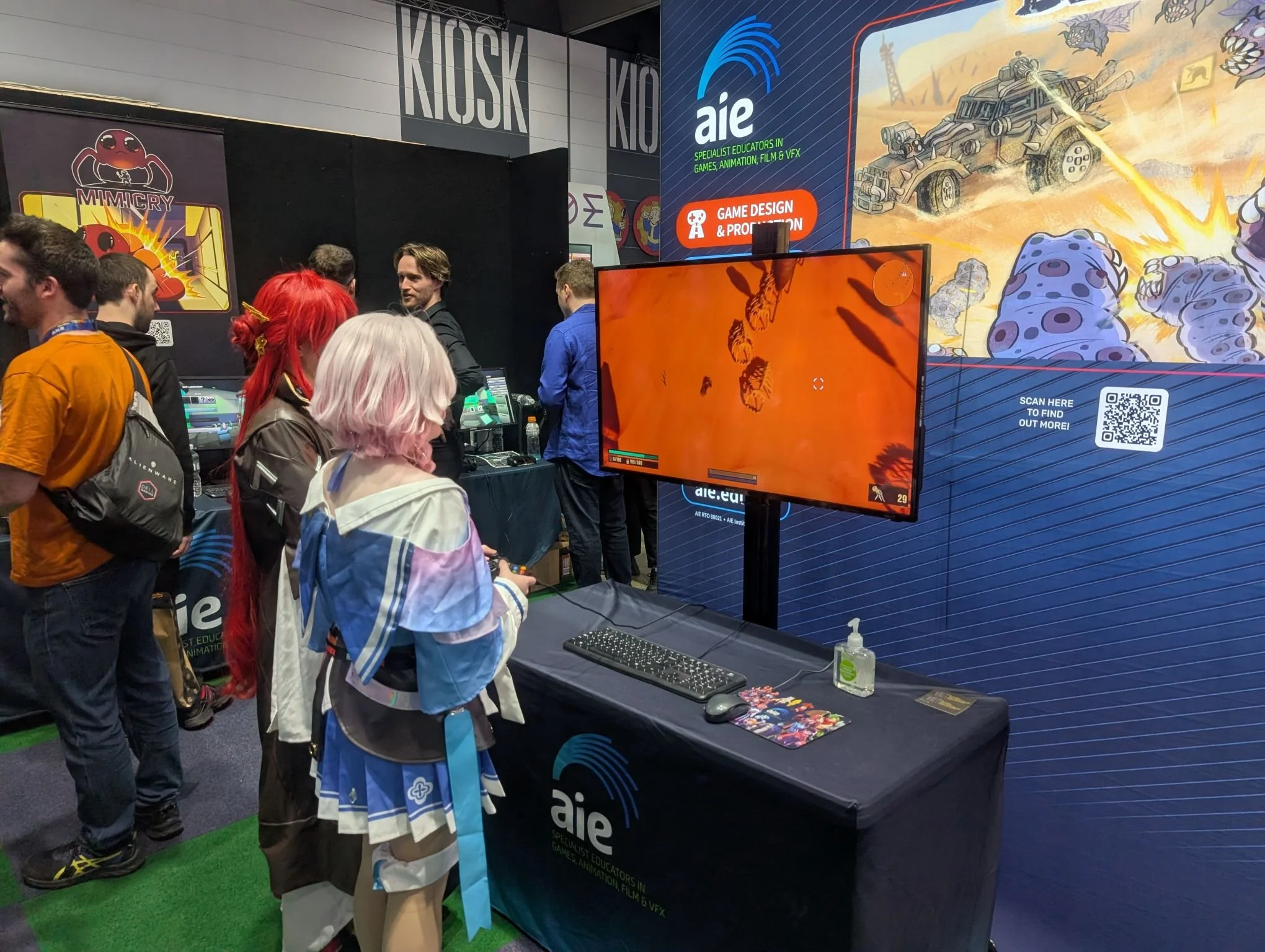
Shortly after entering Alpha, we were informed by AIE that Dust Devil had been selected as one of the games that would be exhibited at the AIE booth at PAX Aus 2025. We were among eight teams selected from across Australia, and the only team from the Sydney campus that was enrolled in the Advanced Diploma course.
This came as a surprise to the team and left us with only a few weeks to produce a polished product that could be exhibited at the event, but we were very motivated to produce the best game we could. Our approach was to focus on creating a vertical slice of the major game systems we had planned, ultimately implementing about 25% of the planned upgrades and abilities but with the full gameplay and UI systems functioning.
PAX Aus proved to be a fantastic event and an invaluable source of player feedback. We were amazed at the number of the attendees that came by and wanted to try out our game. The responses they gave to playing the game in its pre-Alpha phase was incredibly useful and greatly helped to improve the final product.
DESIGN PROCESS
Proof of Concept (Prototyping)
First task during the prototyping phase was to setup basic menu functionality, creating widgets for the main menu and pause menu. I also began working on creating HUD elements for player vitals (health & radiation), ammo count, and game controls.
Next I began working on prototyping the core gameplay loop, creating the fuel conversion mechanic and the vacuuming effect when collecting resources. I also implemented basic functionality for radiation zones, vehicle ramming and item pickups (such as ammo and health).
After this I began building a prototype level with some placeholder art assets (trees, signs, barrels). This level was to be used for testing and was sculpted in-engine using Unreal’s landscaping tool. This level allowed for proper testing of vehicle movement & controls as well as enemy AI behaviour.
Early development screenshots from prototyping phase
Alpha
During Alpha my primary responsibility was to design and build the game’s vehicle upgrade and customisation system. This included designing the layout and navigation of the customisation menu as well as all UI programming. This was one of the most challenging aspects of the project and certainly the most time consuming, requiring frequent iteration and polish right up until the end of development. You can read more about it below under “UI & UX design”.
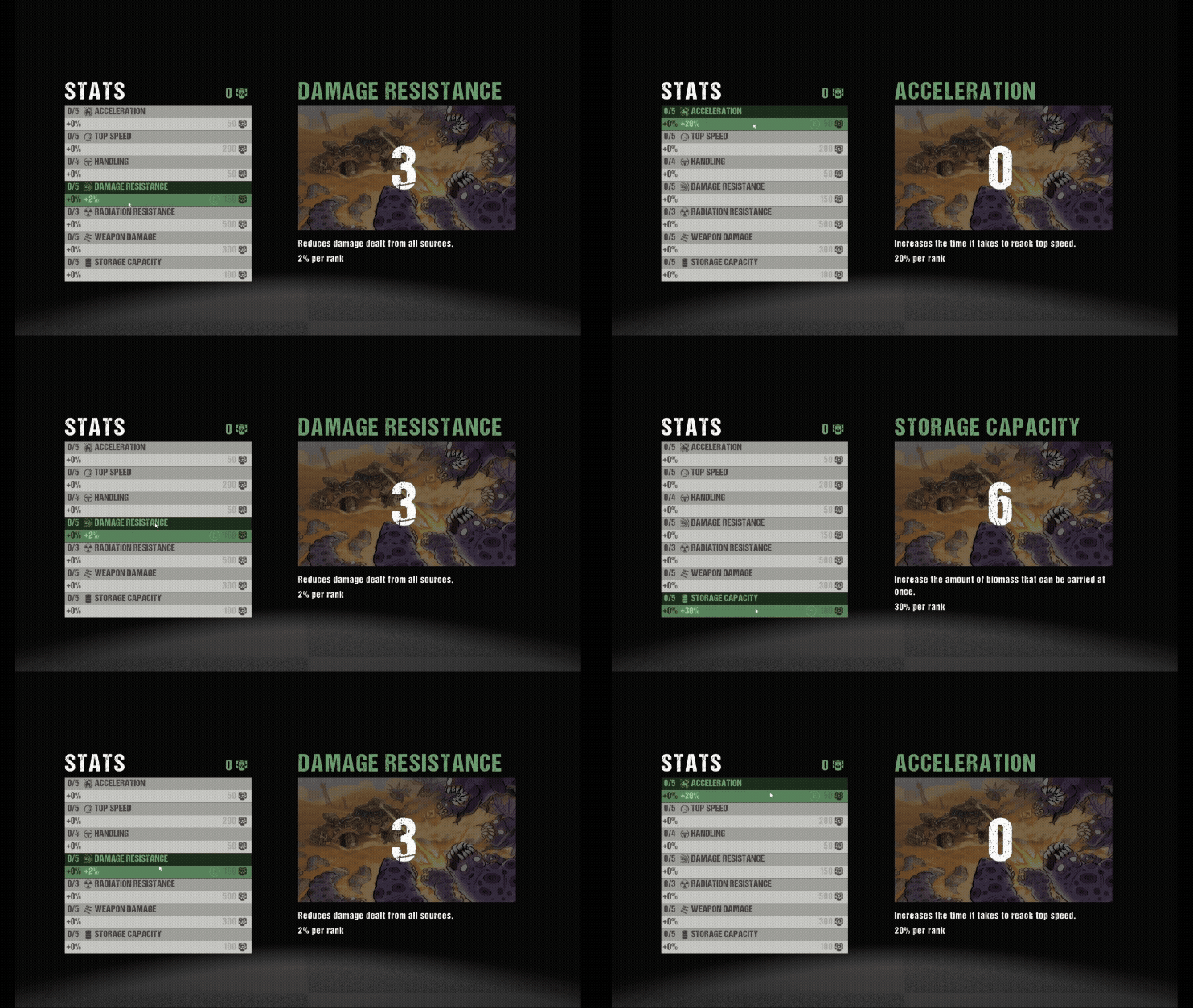
Vehicle stat upgrades menu (progress at end of Alpha)
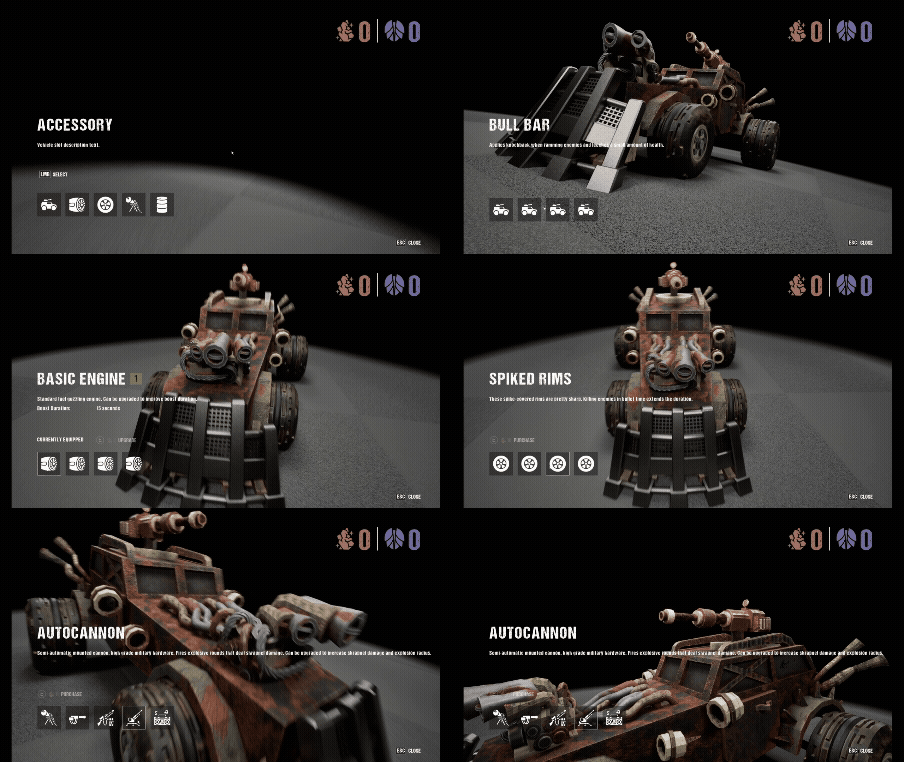
Vehicle customisation menu (progress at end of Alpha)
The next step was to design the upgrades & abilities themselves. I was responsible for coming up with each gameplay ability/effect, how it integrated with the rest of gameplay, and how to balance it effectively. This step involved frequent communication with our team’s programmer, who was responsible for creating the gameplay ability system itself using C++.
We decided to use Unreal’s Gameplay Ability System (GAS), which was well-suited to what we were trying to achieve. It also allowed for efficient tweaking of gameplay values and modifying of gameplay effects in Blueprint, which was very handy as a designer as I could balance the gameplay abilities effectively without having to go into C++.
After this I moved onto design and programming of the UI system for the temporary abilities. This was the core part of our temporary progression system, in which the player can gain a new ability (or upgrade an existing one) after harvesting a certain amount of biofuel.
This step involved creating an in-game ability selection screen that would randomly select three abilities when opened for the player to choose from.
The system also had to be capable of allowing the player to upgrade an existing ability to the next rank, which required the system to filter through their current abilities and generate a ‘blacklist’ to avoid showing abilities and ability ranks they already had.
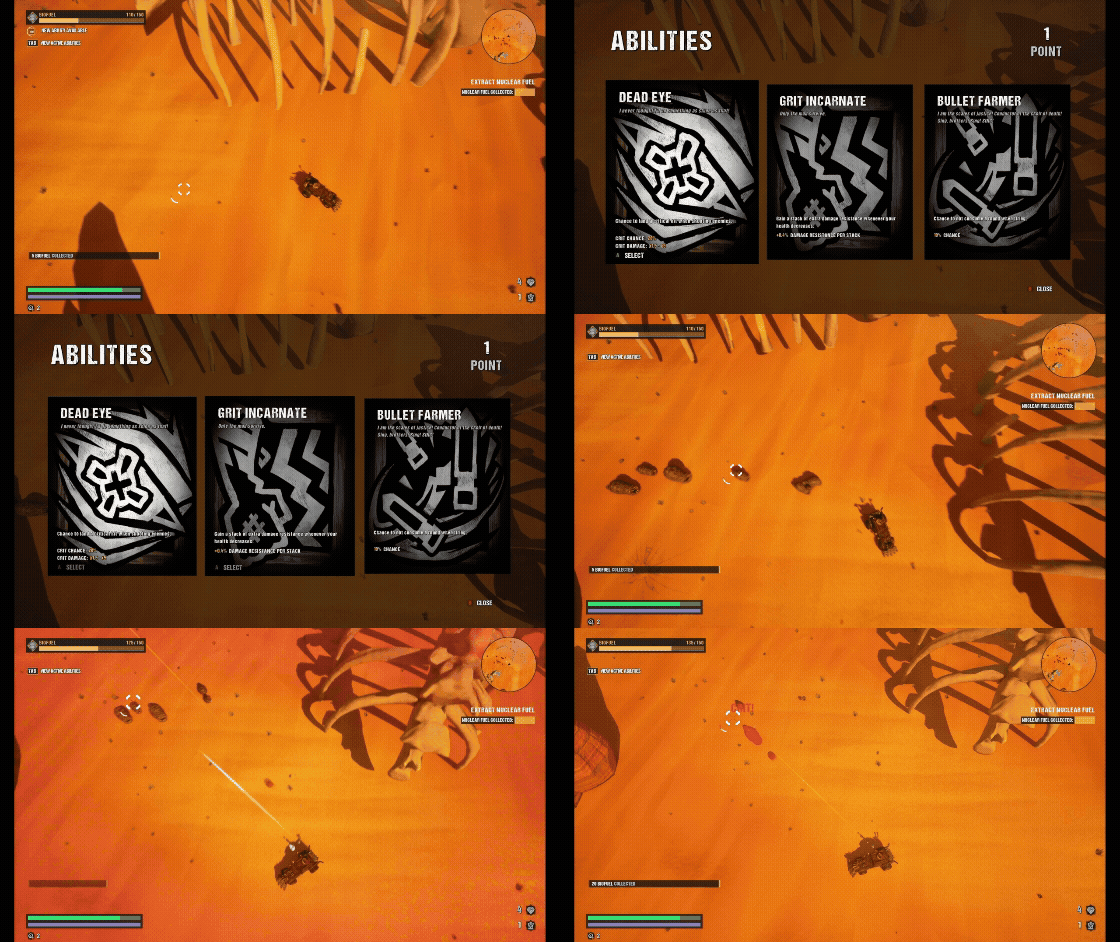
Ability selection menu (progress at end of Alpha)
Next I moved onto level design, creating the first iteration of the tutorial level. This was also a chance to experiment with Unreal Engine’s world partitioning system, which I was using for the first time, as this was intended to be used later to create the open world level. I also added several important level actors, such as customisable enemy spawners, destructible foliage and environment props, and sandstorm walls that functioned as level boundaries.
During this time I also worked iteratively on the HUD design and layout, adding various features such as:
Ammo bars for each weapon type
Biofuel meter and player ability level
Player objective tracker
Message log for identifying collected resources
In-game screenshots from end of Alpha, showing new tutorial level with updated HUD and gameplay features
Beta
During Beta I worked primarily on the game’s open world level, built using world partitioning. I was responsible for the overall design and layout, building all the scenes and environments, implementing all art assets, setting up enemy spawns, implementing level scripting for objectives, and everything in between. Check out “Level Design Overview” below for more detail on this step.
Initial concepts for world map and level layout:
Terrain and geography
Map zones & threat levels
Landmarks & points of interest
Radioactive zones
Final level layout diagram:
Final in-game level:
During this stage I also continued to work on updating and improving the game UI, adding a list of currently selected abilities to the HUD as well as icons to indicate active buffs and other gameplay effects. I also implemented the minimap/compass, which utilised a custom map texture, tracked player position and direction, and included map markers for points of interest (POIs) in level.
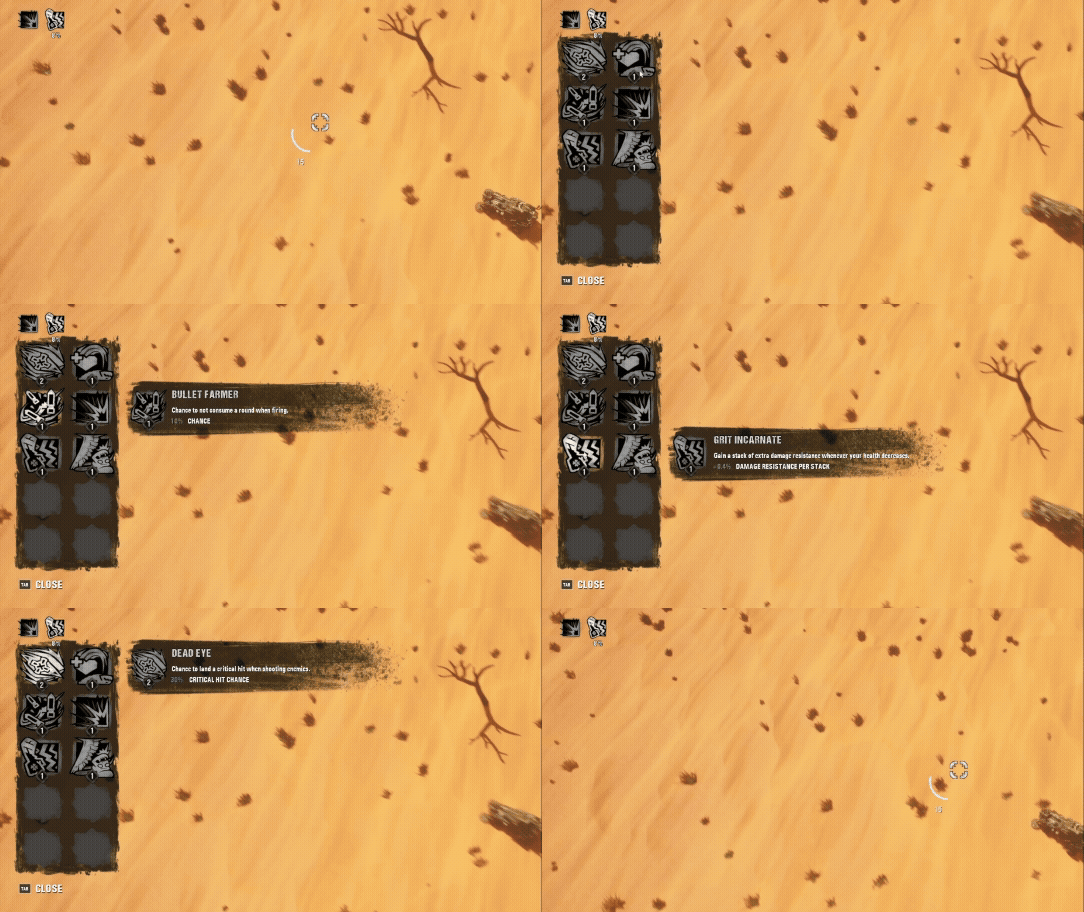
Active abilities menu
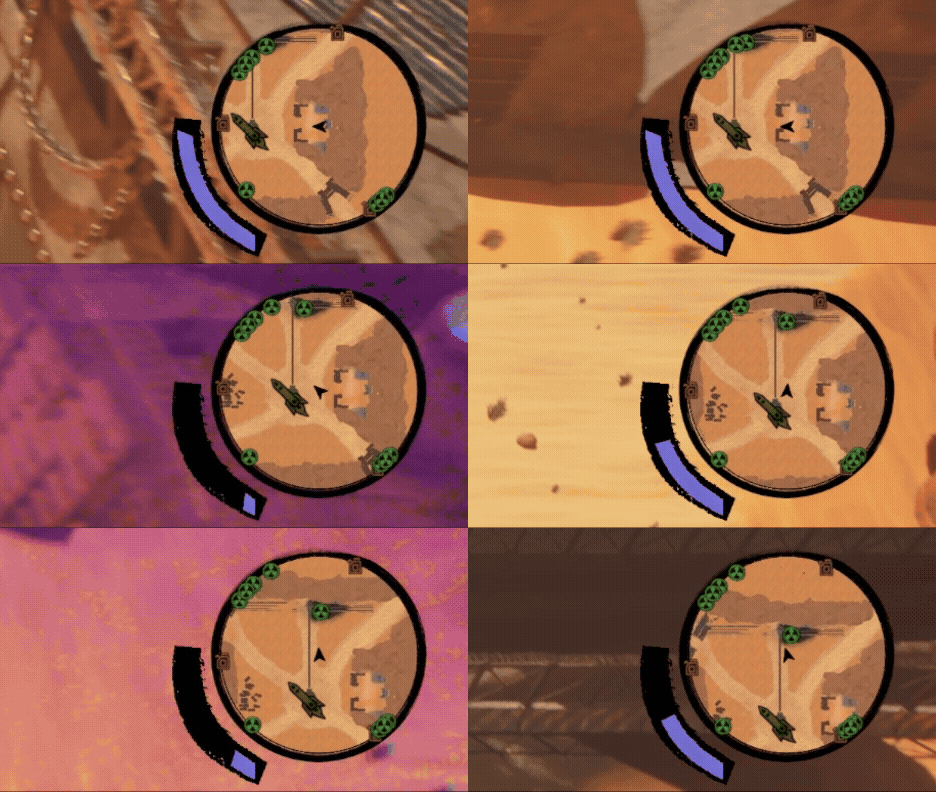
Minimap and compass
The last major task undertaken during Beta was creating the primary objective for the open world level, in which the player must arm a dormant nuclear missile and then defend the silo from attack until the missile can launch successfully.
Here I handled all the necessary level scripting for this to work properly, as well as updating the player HUD and resolving potential bugs and other technical issues.
In conjunction with my co-designer, I also worked on the final endgame chase sequence, in which the player must race to the end of a long, hazardous valley and escape the area before the missile they’ve just launched detonates.
Playthrough of missile launch objective and endgame chase sequence
Gold
The Gold stage was primarily taken up by extensive bugfixing, level and gameplay polish, and finalising design documentation. During this stage we also worked as a team on producing marketing material for the game and preparing for our industry showcase event at AIE.
During this stage I worked mainly on polishing the open world level and adding as much detail as possible. I also spent time on gameplay balancing, tweaking enemy stats and ability effects. I also created a background scene for the main menu and implemented a handful of additional sound effects and music tracks.
Lastly, with the help of our team’s programmer, I tackled the design and functionality of the settings menu, allowing the player to adjust audio volumes, graphics and display settings, and controller inputs/keybindings.
Build compilation showing week by week progress:
UI & UX DESIGN
HUD
Given the limited player visibility due to the game being played from a top-down perspective, my goal with designing the HUD layout was to minimise screen usage as much as possible and allow the player to use as much of the screen space as possible for aiming/shooting as well as scanning their surroundings.
For this reason, I aimed to combine widgets in ways that would reduce their screen presence, such as using a radial slider for the boost bar and wrapping it around the minimap. Similarly, ammo bars wrap around the reticule and follow the player cursor, so players will immediately notice important information such as low ammo warnings.
Low priority information such as the permanent currencies and consumables were kept small and confined to the bottom corners, while high priority information such as ammo count, player vitals (health, radiation), enemy health bars, and boost meter were given greater emphasis and screen presence.
HUD Breakdown:
(1) Player vitals (health, radiation, biofuel)
(2) Active abilities & buffs
(3) Message log
(4) Consumables
(5) Boss health bar
(6) Permanent currencies
(7) Objectives
(8) Minimap & boost meter
(9) Reticule and ammo bar
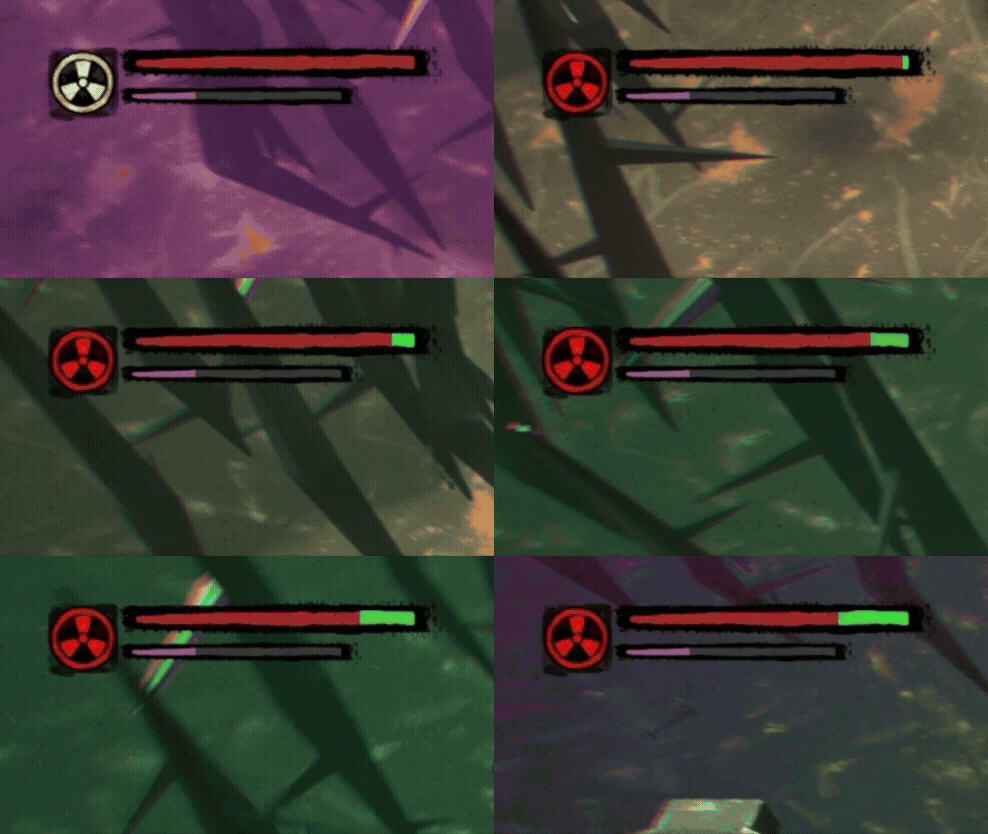
Radiation threat level & damage feedback
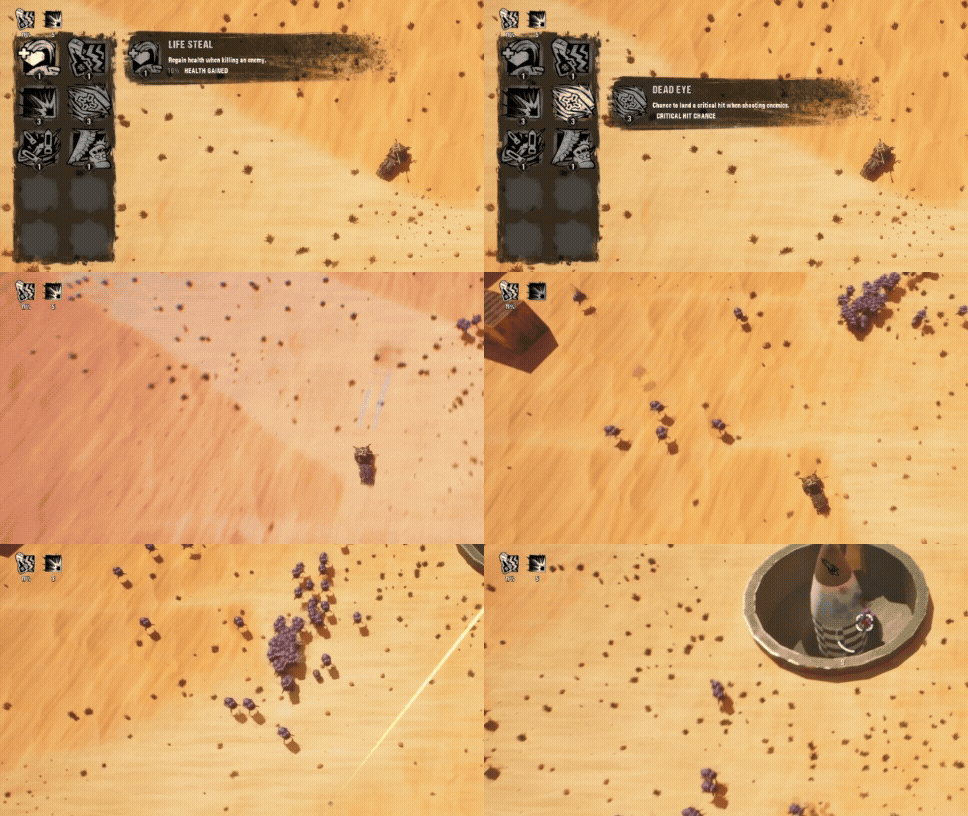
Feedback for ability buffs activating
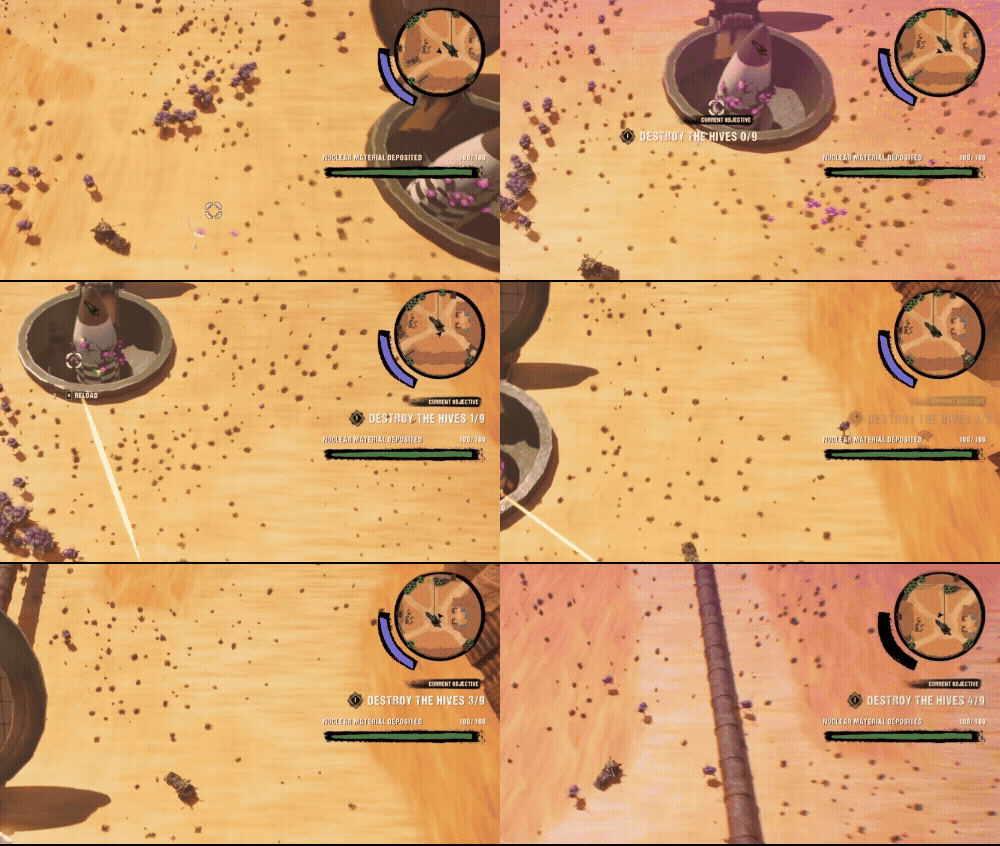
Adding/updating objectives
Vehicle Upgrade & Customisation Menu
Permanent progression in Dust Devil is split into two core systems:
The first is stat upgrades, which provide incremental improvements to core vehicle attributes, which are central to any build the player might put together. These consisted of:
Acceleration (time taken to reach top speed)
Top Speed (the maximum speed the vehicle can reach)
Handling (how small the turning angle is)
Damage Resistance (how much base damage is negated from enemy attacks)
Radiation Resistance (how many rads the player absorbs inside radioactive zones)
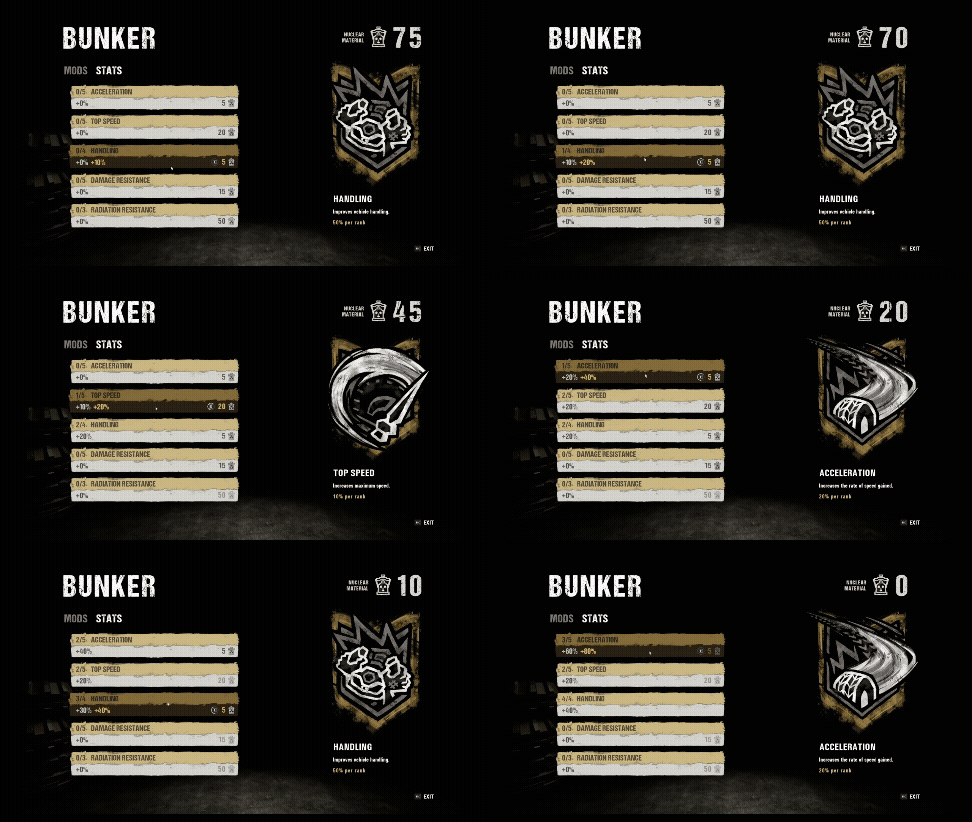
Stat upgrades menu
The second is vehicle mods, which add unique gameplay abilities and effects as well as visual customisation of the vehicle itself. Mods were divided into five separate upgrade slots, with only one available per slot. Each slot's upgrades were designed to tie in with one of the core gameplay abilities.
Bumper (affects ramming ability)
Engine (affects nitro boost)
Tires (affects bullet time)
Mounted Gun (affects ranged combat)
Storage Tank (affects resource gathering)
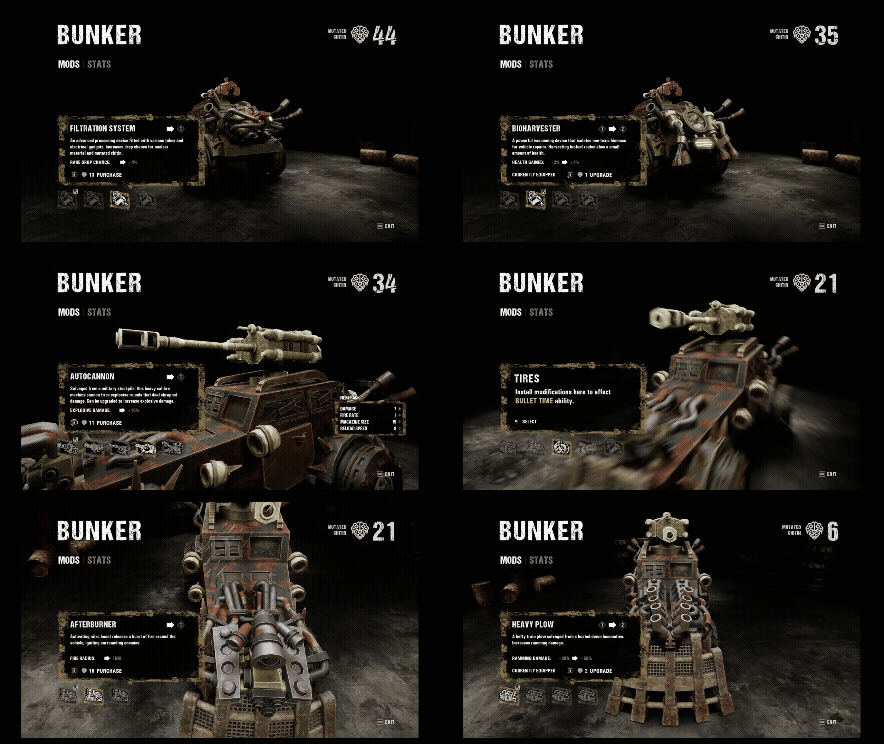
Vehicle mods menu
I was responsible for designing and programming the UI menus that would make this system work, which was done through UMG (Unreal Motion Graphics), the built-in UI tool for Unreal Engine, and coded in Blueprint.
The biggest challenge for me in building the UI was data management - ensuring all the information needed was there (gameplay values, currency amounts, UI icons) and everything in the UI itself updated correctly following input from the player.
UI Wireframes & In-Game Versions
LEVEL DESIGN OVERVIEW
Spike Field
Spike field gameplay
Based on the conceptual “spike fields”, a proposed technique for long-term nuclear waste warning. Consists of towering metal spikes protruding from the ground.
Designed to be the most challenging area of the game, due to extreme radiation levels, difficulty in movement and navigation, and high density of irradiated enemy variants.
Most of the open world consists of large, open plains designed to make driving around feel fast and unobstructive while also supporting the formation of large swarms of enemies.
By contrast, the spike field flips this on its head, introducing the player to a landscape rife with obstacles, causing frequent collisions, which adds to their panic as they try to escape quickly before they are overwhelmed with radiation.
Toxic Waste Dump
Toxic waste dump gameplay
Consists of an enclosed valley with large dumping grounds for toxic waste and other nuclear material. Previously used as an abandoned survivalist outpost, it is now overrun with bugs and covered in grotesque hives.
Features a high proportion of irradiated Flesh-Tearers and Metal-Biters, which emerge from the poisonous terrain that surrounds the edges of the valley and the rock formation in the centre, attacking the player from both sides.
The navigable terrain consists of a elliptical track that allows the player to continously loop around the centre rock formation as they fend off enemies, with two entry/exit points at the north and south ends for the player to escape through.
Chasm-Eater Valley
Chasm-Eater Valley boss fight
Consists of a long valley running in a horizontal direction along the southwest section of the map. Features high cliffs and a handful of narrow passes leading in.
Features very dense dust clouds, obscuring the player’s vision. This prevents them from noticing large swarms of Flesh-Tearers spawning from under the rock walls on both sides of the valley, which move to intercept the player from both sides as they drive through.
At the end of the valley, the terrain widens slightly into a small clearing with an irradiated bomb crater at the centre and a handful of irradiated Flesh-Tearers.
This area is guarded by a Chasm-Eater miniboss, whose burrowing attacks are harder to avoid than normal given the narrow space the player has to manoeuvre in.
DESIGN CHALLENGES
Top-down level design
One of the biggest challenges encountered during level design was how to build environments that would allow the player to navigate through efficiently without compromising on speed, which was made more challenging due to their view being restricted to a top-down perspective.
During playtesting, players were frequently crashing into environmental obstacles and heading out of bounds, which was a consequence of the limited field of view that came from a top-down perspective. This was causing player frustration as it often broke up the flow of gameplay.
This issue was partly mitigated by introducing more destructible actors, allowing the player to smash through most environmental obstacles, but I also wanted to design the different level areas to streamline vehicle movement and prevent these issues from arising.
For this reason, I aimed to design each point of interest with multiple entry/exit points, thereby avoiding situations where the player would hit a dead end or find themselves needing to reverse/turn around. Miniboss areas were also designed to be as large and open as possible, giving maximum space for moving around and evading enemy attacks.
See the diagrams below outlining the intended player paths through each area, along with enemy spawn points and miniboss encounters.
Maintaining flow state
One of the persistent design challenges we had was integrating the in-game economy and progression systems without negatively impacting on the player's flow state.
The first issue here was with ammo economy. Early versions of the game featured a limited ammo count that could only be replenished through trading biofuel at fuel depots, but during playtests we found that people were quickly running out of ammo, often in the middle of combat, and expressing frustration at having to double back to a fuel depot to restock.
A similar problem arose with how temporary abilities worked - initially the player had to locate a fuel depot and then deposit enough biofuel to acquire a new ability point. This meant that players were often collecting enough biofuel to level up several times before ever reaching a fuel depot.
These issues were ruining the flow of gameplay, as our intended experience was for players to be mowing down a seemingly never-ending swarm of bugs as they blazed across the desert. Having to disengage and run away from swarms to get more ammo was making players feel weak and underpowered.
This also conflicted with one of our original design pillars - converting enemies into resources. The more bugs you eliminate, the more biofuel you produce, and thus the stronger you become. We wanted players to be cleaving their way through swarms while getting swamped from all sides, fighting until the bitter end - not forced to flee because they felt weak and defenceless.
To solve the first problem, we decided to give the player infinite ammo reserves while still limiting firing time. For the autocannon, flamethrower and machine gun this meant magazines clips with limited ammo that would have to be reloaded regularly. For the minigun, this involved an overheating mechanic, and for the soundwave it meant charge up and cooldown times.
For the second issue, we had biofuel convert instantly to XP when collected, allowing players to level up as soon as they passed the next threshold. Opening the ability selection screen could now be done anywhere and temporarily paused the game until the player exited the menu.
Ammo economy and HUD design
Following on from the above, we also had to rethink how we communicated information to the player through the HUD. Ammo counts were originally shown at the bottom right corner along with the equipped weapon type, but I observed in playtesting that most players were not paying much attention to this and we surprised and confused when they ran out of ammo.
I realised this was because so much of the player's mental state is focused on the gameplay itself, having to balance both driving the vehicle efficiently and accurately targeting enemies, that they couldn't devote much attention at all to information in their periphery, such as the ammo count that was situated at the bottom right of the screen.
To fix this problem I redesigned the ammo meter to use a radial slider instead, which would wrap around the player's reticule and follow their cursor. Since the player's eyes are always on their cursor, focusing on where they are aiming, they can always easily see their ammo count and their weapon's reloading/cooldown status.
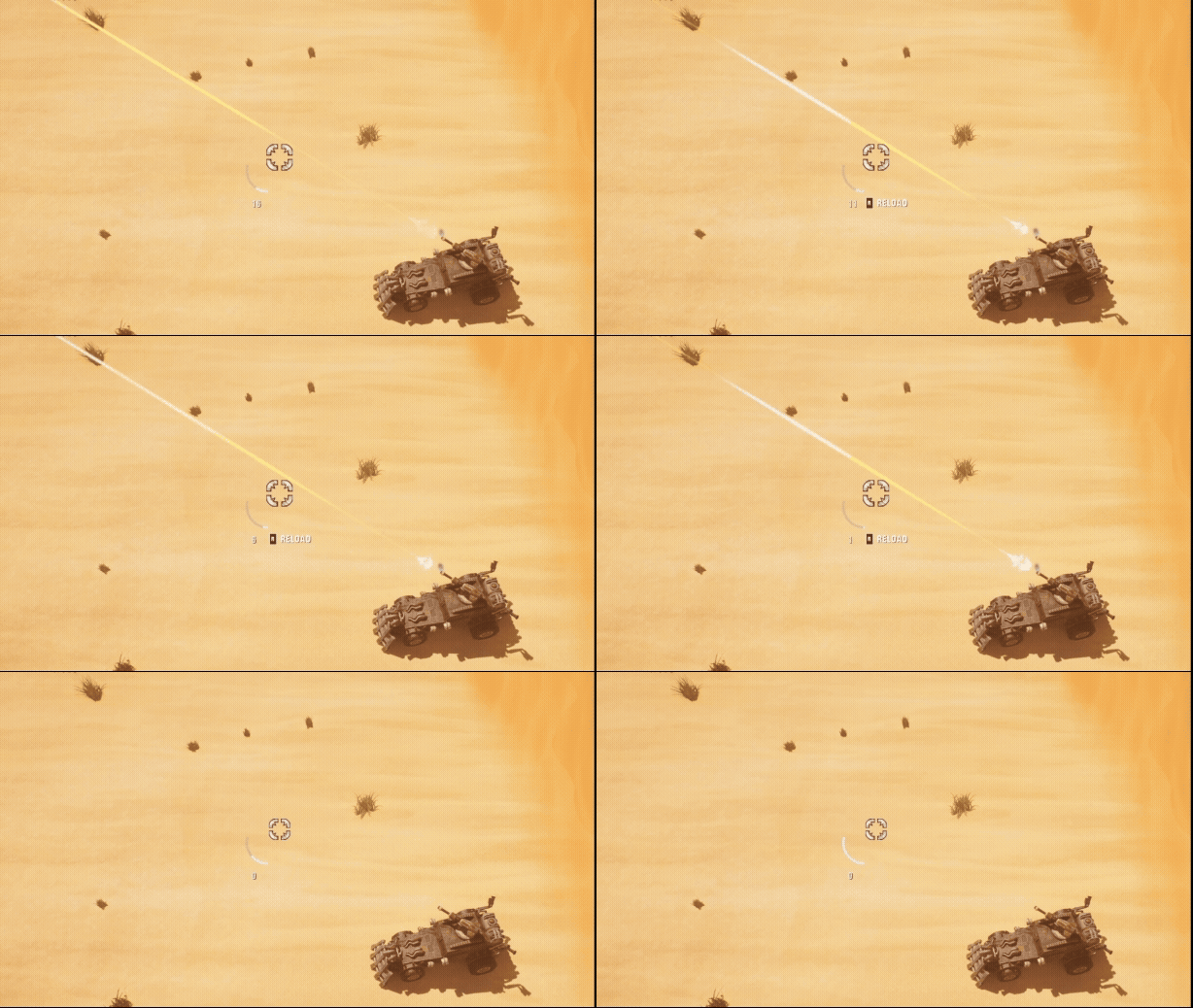
Reloading equipped magazine (Autocannon, Flamethrower, Machine Gun)
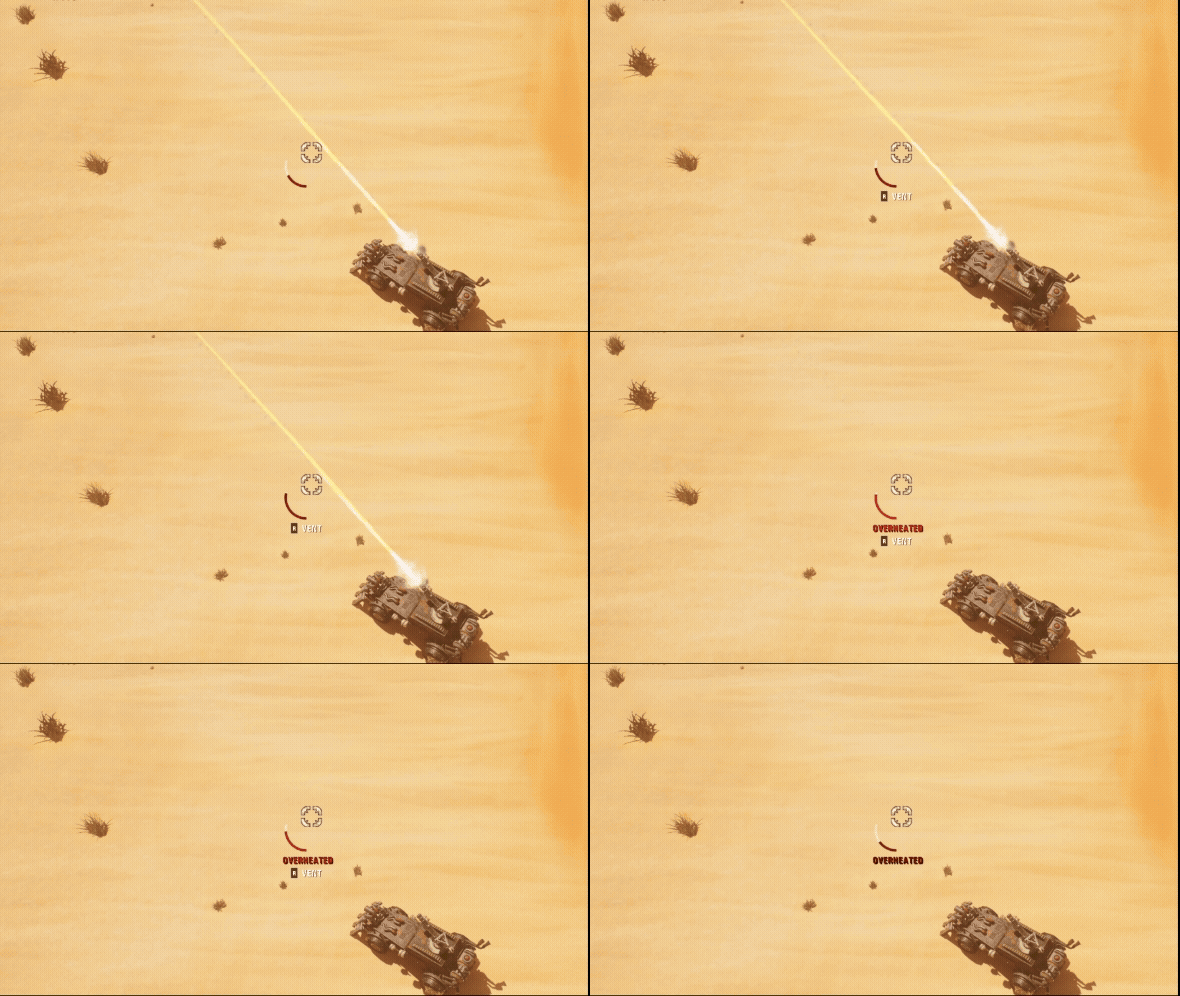
Heat build-up and cooldown meter (Minigun)
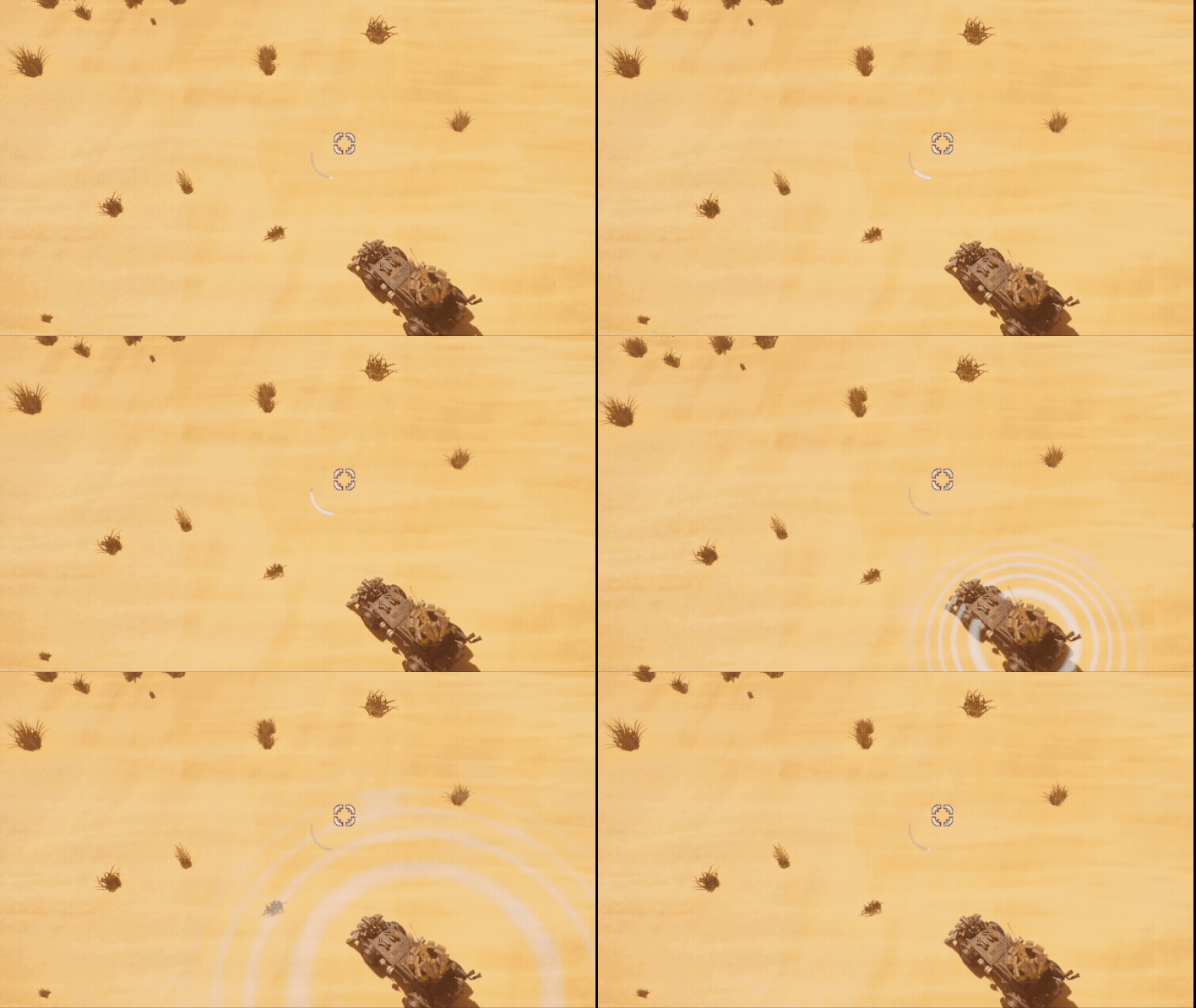
Charging up meter (Soundwave)